


Simulation-Driven Design
Combining proprietary ion optic modeling with industry-leading SIMION software for advanced instrumentation
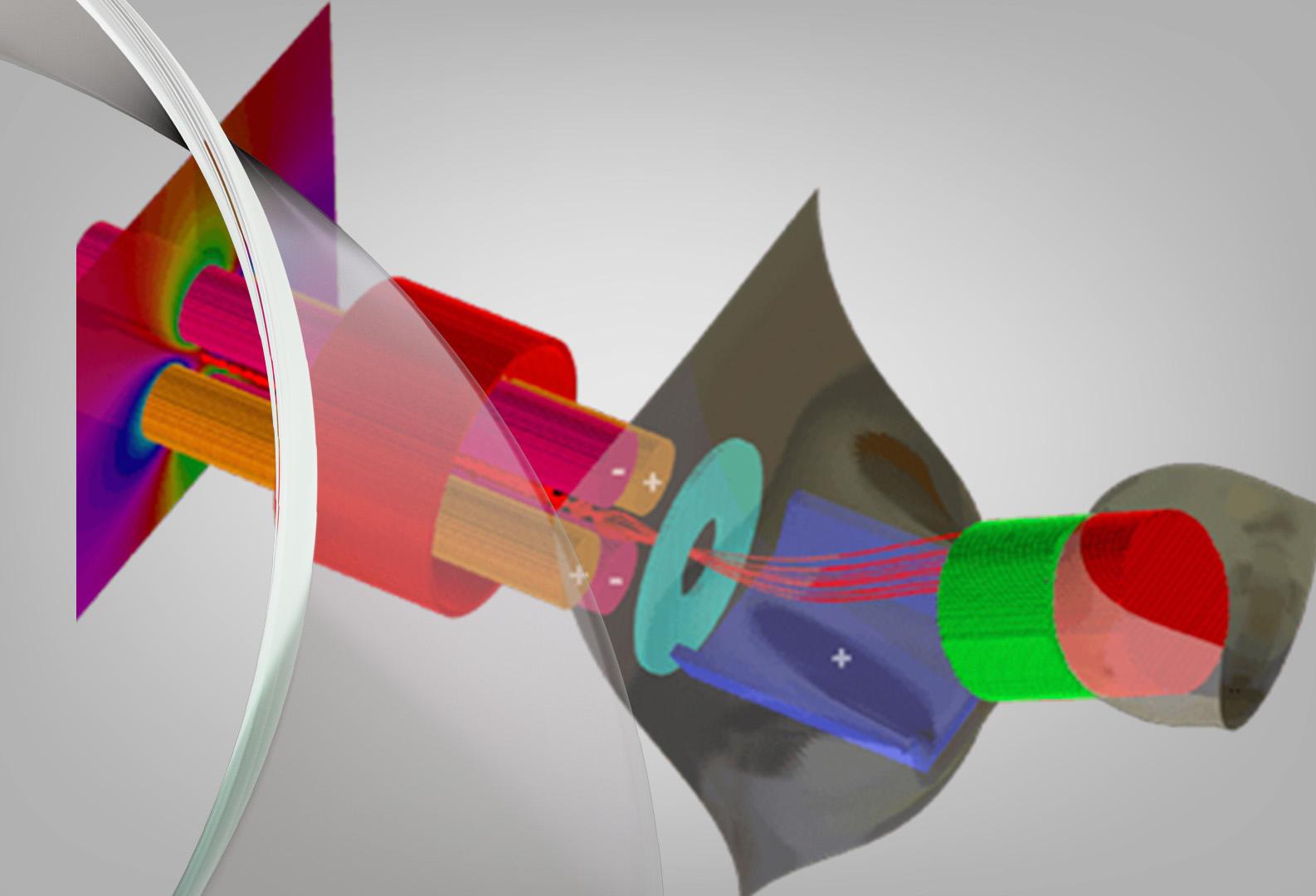
At IMI Life Science, we harness the power of simulation to design components that deliver exceptional accuracy and performance. Our approach combines proprietary ion optic modeling with industry-leading SIMION software to optimize every detail before physical prototyping - saving time, reducing cost, and ensuring superior results.
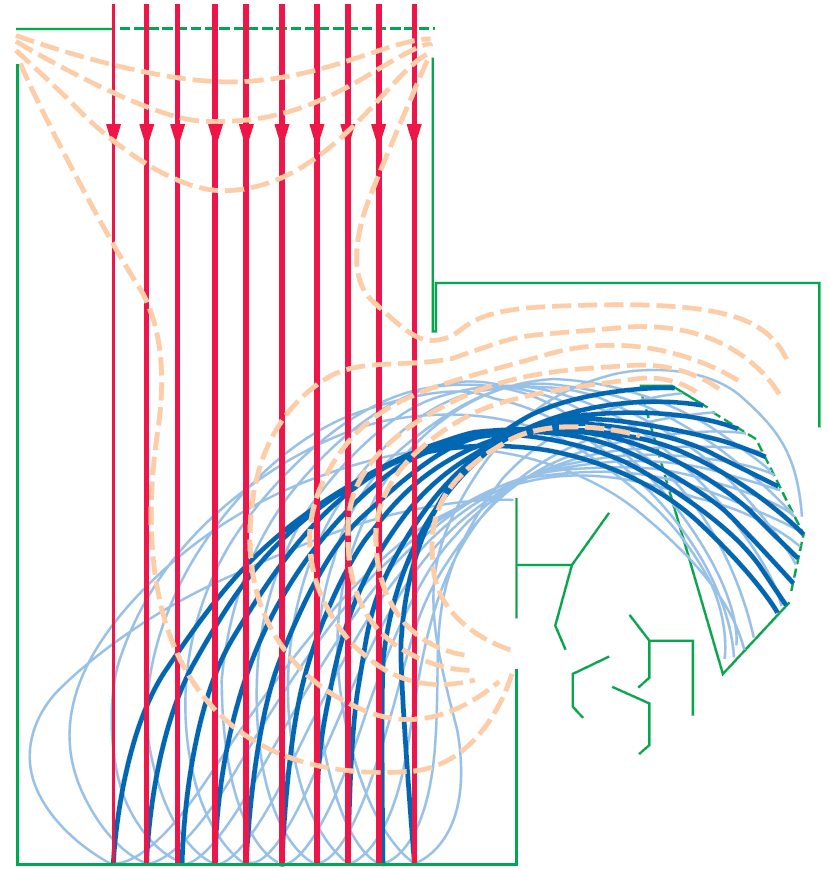
Proprietary Ion Optic Modeling
Central to our technology is the ability to accurately model ion and electron trajectories and predict the influence of magnetic and electric fields inside mass spectrometers - particularly in the detector region. Using simulation software developed in-house and refined over 20+ years, we can:
- Configure models to simulate secondary electron behavior with minute configuration changes.
- Optimize detector designs for maximum sensitivity and resolution.
- Model complex electron optics for large-area detectors (HED) and magnetic TOF systems.
- Use state-of-the-art supercomputers for high-speed, high-resolution simulations.
Example Applications:
Industry-Standard Ion Optics modelling Software - SIMION
SIMION is a software package primarily used to calculate electric fields and the trajectories of charged particles in those fields when given a configuration of electrodes with voltages and particle initial conditions, including optional RF (quasistatic), magnetic field, and collisional effects. In this, SIMION provides extensive supporting functionality in geometry definition, user programming, data recording, and visualization. It is an affordable but versatile platform, widely used for over 30 years to simulate lens, mass spec, and other types of particle optics systems, with extensive validations for many applications. OEM tailored courses are offered on-line for OEM R&D teams.
Why Simulation-Driven Development Matters?

Accelerated Development
Virtual testing reduces costly iterations.

Optimized Performance
Predictive modeling ensures precision and reliability.

Cost Efficiency
Fewer prototypes, faster time-to-market.
Accelerated Development
Virtual testing reduces costly iterations.
Optimized Performance
Predictive modeling ensures precision and reliability.
Cost Efficiency
Fewer prototypes, faster time-to-market.